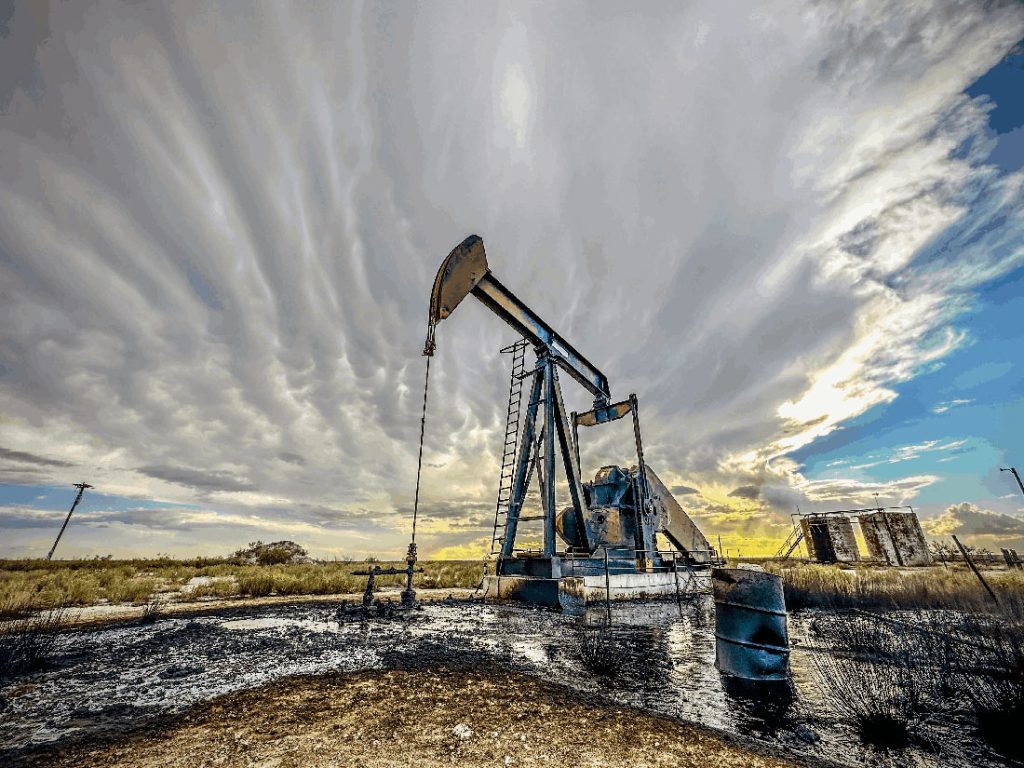
Three orphaned wells are leaking methane and petroleum into one of western Pennsylvania’s most celebrated recreational corridors. The Well Done Foundation is finally fixing it.
RIMERSBURG, Pa. — The Redbank Valley Trail was named the Pennsylvania Department of Conservation and Natural Resources’ very first Trail of the Year in 2014. The 51-mile converted railroad grade winds through some of western Pennsylvania’s most pristine landscape: steep forested hillsides, a free-flowing creek with seasonal flood and ice-scour dynamics, rare big bluestem and Indian grass river grassland communities, and threatened plant species like blue false-indigo scattered along the cobble bars.
The trail connects to the Armstrong Trail along the Allegheny River, forming part of the Erie-to-Pittsburgh Trail corridor. Thousands of cyclists, hikers, cross-country skiers, and nature seekers use it annually. East Brady, the nearest trailhead to the problem area, sits at the confluence of Red Bank Creek and the Allegheny.
But somewhere between Lawsonham and East Brady, where the creek bends through that beautiful landscape, the air turns sharp. Sulfurous. Wrong.
Most riders pedal faster. They shouldn’t have to.
Three wells, one flood plain
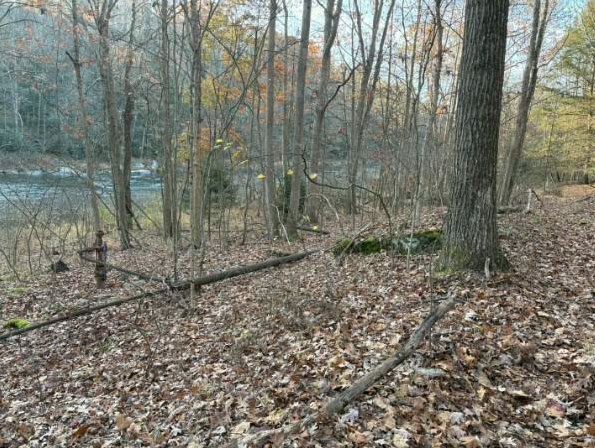
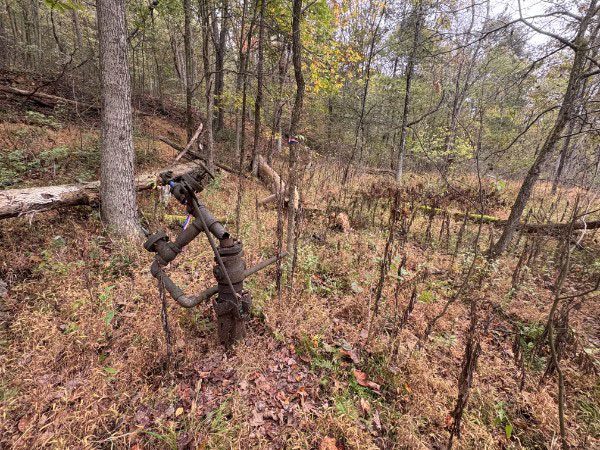 The smell comes from three orphaned oil and gas wells — Montgomery 1, Garver 1, and Garver 2 — sitting in the creek’s flood plain, leaking methane into the soil, the water, and the atmosphere. They’ve been leaking for years.
The stretch where these wells sit is classified by the state’s Natural Heritage Program as a Biological Diversity Area. The wells are contaminating the very waterway the trail celebrates, posing risks to the health of thousands of annual trail users and nearby residents who live with the emissions daily.
For Jim Montgomery, whose property borders the wells, it’s personal. A family member was fatally injured years ago in an incident involving a well just like these — a gas accumulation that ignited in a home. It’s the kind of quiet tragedy that happens too often in rural Pennsylvania, where an estimated 200,000 or more orphaned wells dot the landscape.
But for a decade, despite efforts to get help, nothing changed.
A decade of dead ends
About ten years ago, a local oil operator named Eric Gourley with G&G Gas recognized the severity of the leaking wells and put together a project proposal to get them plugged. He submitted it to the Pennsylvania Department of Environmental Protection, but the project didn’t move forward.
The Montgomerys wrote letters. Community members made calls. A local representative’s office got involved. But for reasons that are all too common with the state’s massive backlog of orphaned wells, the project never gained traction.
Pennsylvania has more orphaned wells than any other state — an estimated 200,000-plus. Even with billions in new federal funding from the Infrastructure Investment and Jobs Act directed toward plugging them, the sheer volume means many communities continue to wait.
Scott Motter comes knocking
 Scott Motter has been in and around Pennsylvania’s oil fields for more than 50 years. He pumped his first rod line with his grandfather in Seneca at fourteen. He drilled wells in the 1980s, served as an ICBM missile maintenance technician in the Air Force, became a registered nurse, and then spent 14 years as an oil and gas inspector for the PA DEP.
“I grew up in Oil City, Pa., in the mid-1960s, a place that was undeniably an oil town,” Motter wrote in a 2023 Philadelphia Inquirer op-ed. “The air constantly smelled like gas, and abandoned wells were common downtown, next to our schools, and throughout the woods where my friends and I often played.”
After leaving DEP in 2023, Motter joined Zefiro Methane Corp. as their Field Operations Supervisor, then began working with the Well Done Foundation — a nonprofit that has plugged more than 120 orphaned wells and eliminated over five million metric tons of CO₂ equivalent emissions since its founding in 2019.
It was while reaching out to old contacts about problem wells that Motter connected with Eric Gourley, who told him about the Montgomery and Garver sites. Scott drove down to measure the emissions himself.
“These things are leaking pretty good,” Motter confirmed. “Especially the two Garver ones. They pose a real threat to the trail users and the residents nearby.”
When he met the Montgomerys and heard what they’d been through — the loss they’d suffered, the years of waiting — he knew this wasn’t just another well on a spreadsheet.
A path forward
The Well Done Foundation has now adopted the Montgomery 1, Garver 1, and Garver 2 wells. The path to plugging them won’t be simple — the sites sit in a flood plain, requiring special permits and coordination with the Redbank Valley Trails Association. Work will likely need to happen in winter when water levels and less bike path traffic will allow access.
But for the first time in more than a decade, someone with the resources and expertise to actually solve the problem is on the case.
“These are good people who tried to get help and couldn’t get anywhere,” Motter says. “They don’t have the connections or know-how to work the system. But they shouldn’t have to. Nobody should have to breathe this stuff — not the family living next to it, and not the thousands of people riding their bikes past it every year.”
The wells will be plugged. The trail will be safe. And a family that has waited far too long will finally have peace of mind.