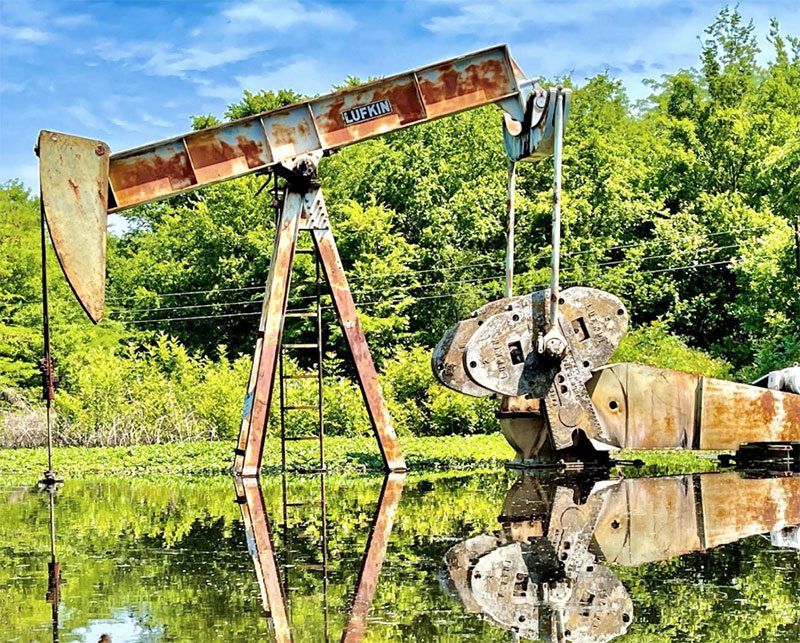
Groundwater is often a “hidden” victim of the orphaned well crisis. While much of the national conversation focuses on methane emissions warming the atmosphere, the threat to the water we drink and use for agriculture is happening right beneath our feet. When an oil or gas well is abandoned and left “unplugged,” it can become a potential vertical conduit between deep, toxic subterranean zones and the shallow freshwater aquifers that provide life to local communities.
The Breach of Natural Barriers
n a properly functioning or correctly decommissioned well, layers of steel casing and cement act as seals. Over decades of neglect, these casings corrode. Once the wellbore’s integrity is lost, pressurized brine (saltwater) and hydrocarbons from deep underground can migrate upward, infiltrating the pristine freshwater layers used for drinking and irrigation.
The Danger of “Produced Water”
It isn’t just oil we worry about. Many orphaned wells leak “produced water”—a byproduct of drilling that is often significantly saltier than seawater and can contain naturally occurring radioactive materials (NORM) and heavy metals like arsenic and lead. According to the Environmental Protection Agency (EPA), even small amounts of these substances can render groundwater unsafe or extremely costly to remediate. Learn more about this at the EPA site.
Soil and Ecosystem Contamination
When contaminated groundwater reaches the surface or nears the root zones of vegetation, it creates “dead zones” that severely limit plant growth. This soil sterilization impacts farmers’ livelihoods and destroys local biodiversity. Educational materials highlighted during Groundwater Awareness Week emphasize that once an aquifer is contaminated, the cost of remediation is often prohibitively high, making prevention (plugging) the only viable solution.
The Path Forward: Plugging the Threat
The Well Done Foundation doesn’t just measure methane; we eliminate it at the source by identifying and permanently plugging abandoned wells. By properly plugging these wells with cement, we restore subsurface isolation and re-establish protective barriers to ensure that “The Water Beneath Our Feet” remains safe for the families who rely on it.
How You Can Help
The scale of the orphaned well crisis is massive, but it is a solvable problem. You can take direct action today:
- Donate: Every dollar helps us deploy our “Pathfinder” teams to locate, measure, and prioritize the most dangerous wells.
- Join Our Newsletter: Stay informed about our latest rescues and see the “Before & After” transformations of reclaimed land. Sign up at the bottom of this page!